Belle Meade's New Fence Rule Is a Clue to Why West Meade Costs Less
October 1, 2026
October 1, 2026
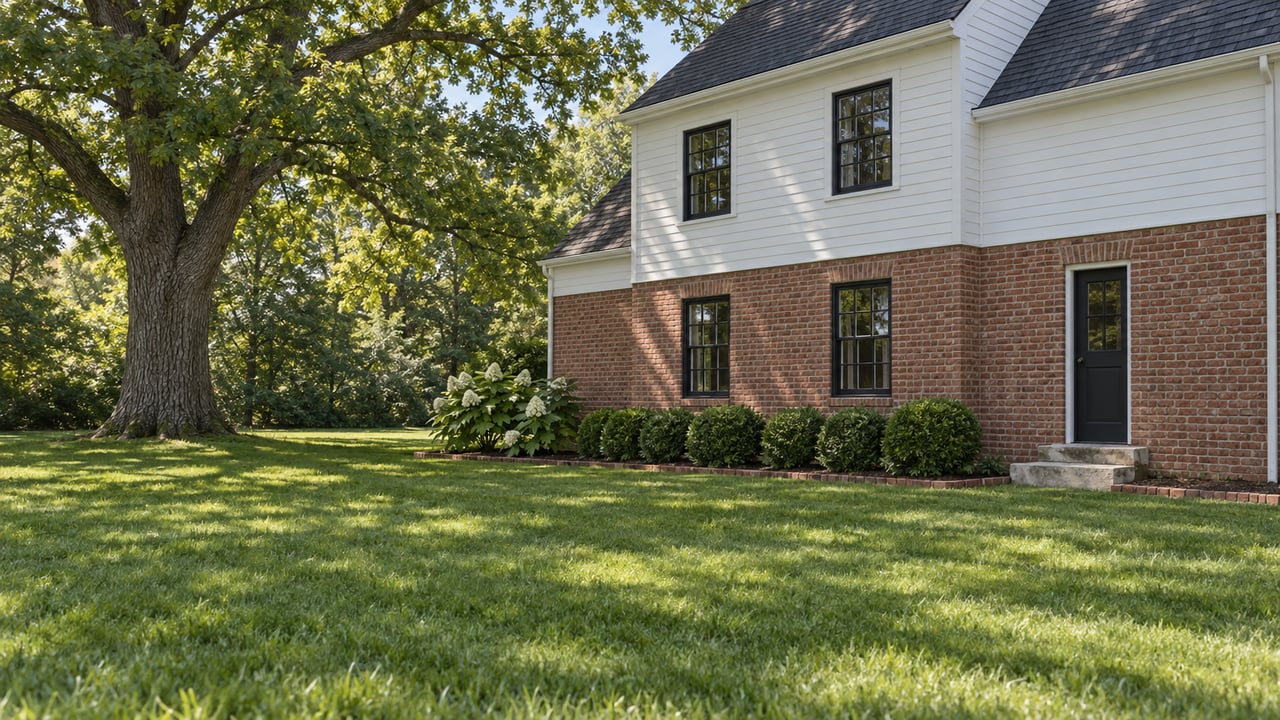
"I think that the whole idea for Belle Meade is for as little change as possible." A longtime resident said that to a local news crew back in 2019, during the public debate over whether the city should create a Historic Zoning Commission. Seven years later, the rule that debate produced has a new addition: since March 15, 2026, any property in Belle Meade issued a demolition or new-construction permit must first install a locking, opaque fence, six to eight feet tall, with the gate set back twenty feet from the road and no signage allowed on it. It reads like a construction-site footnote. It is actually the clearest evidence of something buyers comparing Belle Meade to neighboring West Meade tend to miss: the price difference between these two addresses isn't just about lot size or school zone. It's about which one legally lets you tear down what's already there.
Belle Meade didn't always regulate demolition this closely. The Historic Zoning Commission exists because of a specific spike: around thirty homes were demolished and replaced with custom or speculative construction within a two-year window leading up to 2019, enough of a shift that the Board of Commissioners passed a 150-day moratorium on demolition permits while it built a review structure. A citizen survey that year drew 757 responses, and 71 percent said they were concerned or very concerned about the changing architectural style of new construction, while 88 percent said zoning was important for balancing growth against the neighborhood's architectural identity, according to Community Impact's coverage of the vote. The city's planning official at the time put the goal plainly: "We don't want to tell people what they can and can't do to their homes. We're merely trying to keep the newly constructed homes in harmony with Belle Meade."
That harmony now has a name. Any request to demolish, add onto, or move a building inside the designated historic zone goes through the HZC, which issues or denies a Certificate of Appropriateness based on design guidelines the city adopted and later revised. Nashville's Metro Historic Zoning Commission administrator has described the broader category this way in an interview with the Tennessean: a historic zoning overlay is the only tool that can prevent the demolition of a historic property, and it applies on top of whatever base zoning already covers the lot, a distinction explained in more detail in the Tennessean's explainer on historic overlays.
The HZC isn't a rubber stamp, and it isn't predictable in the way a straightforward building permit is. Meeting records from December 2023 show the commission approving a demolition permit for a single-family home on Westview Avenue in the same session where it denied a separate homeowner's request, on Royal Oaks Place, to remove a prior condition that had barred swimming pool construction on that lot. One property cleared review. Another, with a different history attached to it, didn't, even on a second attempt. The lesson for anyone shopping a Belle Meade address with renovation plans already sketched out is that the outcome depends as much on what the commission previously decided about that specific parcel as it does on what you're proposing to build.
If a Certificate of Appropriateness decision goes against an applicant, the appeal doesn't run through a quick administrative fix. It goes to Davidson County Chancery Court, and an aggrieved applicant has sixty days from the order to file. The commission handled 29 cases in 2024 alone, including 15 additions and 8 new-construction reviews, according to the city's own building and zoning year-end report, so the process moves cases through regularly. It just doesn't move them through on the buyer's timeline. When Belle Meade homes sold in a median of 77 days in January 2026, an unexpected Certificate of Appropriateness revision or a denied application can push a renovation past a financing deadline entirely.
West Meade sits immediately adjacent to Belle Meade, close enough that the two names get used almost interchangeably in casual conversation about the area. The zoning underneath them is not interchangeable at all. Much of West Meade carries Metro's RS40 designation, which requires a minimum 40,000 square foot lot, close to an acre, and does not carry anything resembling Belle Meade's Historic Zoning Commission review. A buyer who wants to demolish a mid-century ranch and build new in West Meade is working through standard permitting: a demolition permit, site work and erosion control, tree protection review where it applies, plans review for the new structure, and inspections leading to a certificate of occupancy. There is no design guideline board weighing in on whether the replacement house matches the neighborhood's architectural character, and no Certificate of Appropriateness standing between the building permit and the demolition permit.
That single difference in process is the whole story behind why West Meade functions as a teardown market and Belle Meade largely doesn't.
The closed-sale record makes the gap concrete. In a market analysis of closed West Meade sales through August 2026, homes built before 1980, mostly the brick ranches original to the neighborhood, closed 49 sales at a median of $1,050,000 and $377.69 per square foot. Homes built in 2020 or later, the custom estates replacing those same ranches, closed 21 sales at a median of $3,395,000 and $571.90 per square foot, with the 2025-2026 builds specifically closing at a $3,400,000 median and $607.65 per square foot. That's roughly a $2.3 million gap between what stands on a West Meade acre today and what the same acre can support once it's rebuilt.
The lots underneath both halves of that split are substantial. Across the 78 sales this analysis tracked, the median lot ran 1.04 acres, 46 of the 78 closed on an acre or more, and parcels reached as large as 5.07 acres. That's the mechanism in plain terms: a buyer isn't just purchasing a house in West Meade. They're purchasing land that, under current zoning, can legally become something worth roughly three times as much as what's standing on it now. In Belle Meade, that same acre of dirt carries no such option, because the Historic Zoning Commission exists specifically to make sure it doesn't.
Belle Meade's own market data underscores why price alone is a poor way to compare these two neighborhoods. Belle Meade's median sale price was $4.35 million as of January 2026, with homes selling in a median of 77 days. In that same window, the median listing price was $6.3 million across just 16 active listings, with a median of 94 days on market. Sale prices and asking prices, same month, and the numbers diverge by nearly $2 million, which is what happens in a market this thin. A handful of closings or listings can swing a monthly median hard in either direction, and neither figure tells a buyer whether the specific lot they're looking at is one the Historic Zoning Commission is likely to let them touch.
That's the practical takeaway for anyone weighing these addresses side by side. West Meade's lower entry price isn't simply a discount for being one address removed from Belle Meade. It's the market pricing in rebuild optionality that Belle Meade's zoning was built specifically to close off. A Belle Meade purchase is, in effect, a purchase of a protected, finished asset, with the trade-off being a review process that can add months and uncertainty to any meaningful change. A West Meade purchase on an older ranch is closer to buying the land itself, with the house as a placeholder, and the $2.3 million spread between original stock and 2020-or-newer rebuilds is the return that optionality has been producing.
None of this is settled permanently. Nashville's Metro Council has an active, multi-year debate over missing-middle zoning reform, and opposition has run strongest in wealthier enclaves including West Meade, according to Nashville Scene's coverage of the ongoing rezoning fight. The West Meade Neighborhood Association has publicly opposed at least one specific proposal that would have allowed a torn-down single-family home to be replaced with two houses on the same lot, laying out its objections on the association's own site. Whatever the outcome, it's a reminder that the RS40 rules driving West Meade's teardown economics are current policy, not bedrock, in a way that a buyer planning a multi-year rebuild should at least have on their radar.
For a buyer trying to decide between these two addresses, the honest starting question isn't which one costs less this month. It's whether you're buying a house that the city has already decided to protect, or a lot that current zoning still lets you replace. Those are two different transactions wearing the same "37205" label, and the fence rule, the Certificate of Appropriateness backlog, and the RS40 code are where that difference actually lives.
If you're weighing a Belle Meade renovation against a West Meade rebuild, or trying to work out what a specific lot's zoning history means for your timeline and budget, The Milam Group can walk through the parcel-level details before you're under contract.
See every current listing in The Milam Group's portfolio of properties for sale.
This article is general information, not legal, tax or financial advice. Consult a qualified professional about your situation.

Where to Find Outdoor Dining in Franklin, TN, From Riverside Patios to a Downtown Rooftop.
Reasons Buyers Choose to Invest in Franklin, TN, From Downtown Charm to Open Green Space.

How To Shape a Franklin, TN, Home That's Ready for Guests.

Donnel Milam
[email protected]
Bob Milam
[email protected]
Address
5200 Maryland Way, Suite 101
Brentwood, TN 37027
Office
(615) 263-4800
Direct
(615) 414-9069